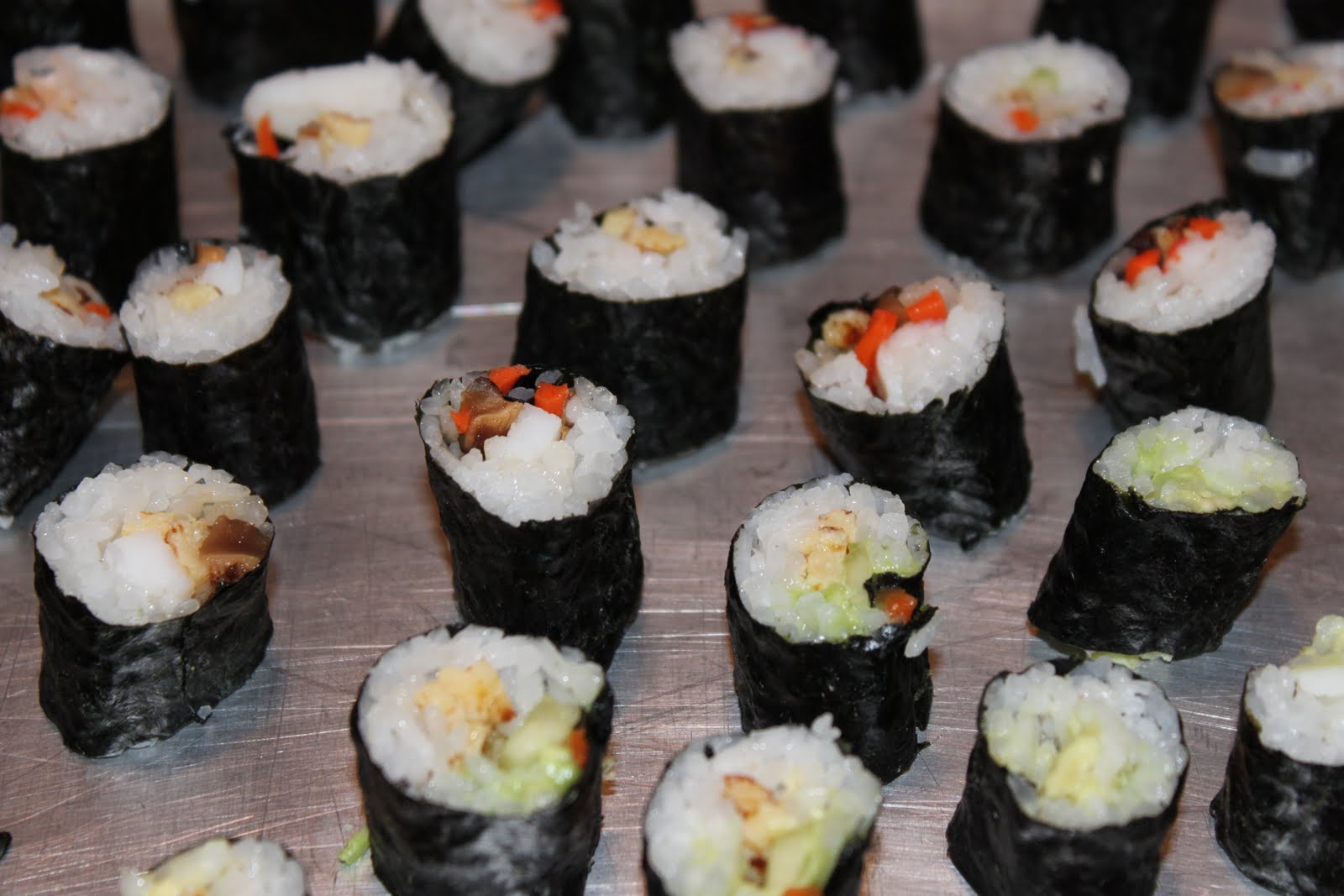
Ingredients
Common fillingsCucumber slices
Cream cheese
Avocado
Crab
Carrots (recipe below)
Shitake mushrooms (recipe below)
Egg omelet (recipe below)
Shrimp (recipe below, or prepare however you'd like)
Seaweed sheets
Carrots2/5 cup or 110 ml chicken broth
1 carrot, sliced long and skinny
1 teaspoon sugar
pinch of salt
1 teaspoon Mirin (sweet cooking sauce)
Shitake Mushrooms4 hydrated mushrooms
2/5 cup or 110 ml chicken broth
2 tablespoons sugar
1 tablespoon Mirin
1 tablespoon soy sauce (gf)
Egg Omelet2 eggs
1 tablespoon half-and-half or dashi stock
2 teaspoons sugar
1/4 teaspoon Japanese soy sauce (gf)
pinch of salt (optional - some soy sauces are very salty)
1 teaspoon vegetable oil
Shrimp6 shrimps
water and salt
3 tablespoons stock
1 tablespoon vinegar
1 teaspoon sugar
pinch salt
Vinegar Rice2 cups rice (Japanese size for rice-cooker)
1 2/3 US cups water
4 inch konbu kelp
1/5 US cup rice vinegar
2 tablespoons sugar
1/2 teaspoon salt
Vinegar-added water (about 1 tablespoon in a medium bowl of water)
Instructions
Carrots1Simmer all ingredients until tender.
Shitake Mushrooms2Cook on low to medium heat for about 10 minutes until most of the liquid is evaporated. Cool and slice.
Egg Omelet3Whisk the eggs, half-and-half or stock, sugar, soy sauce and salt together in a bowl.
4Place a nonstick saute pan over medium-high heat. Pour 1/2 teaspoon of the vegetable oil into the pan and coat evenly using a paper towel; discard excess oil.
5Once the oil is hot, pour half the egg mixture into the pan in a thin layer and cook until almost dry, about 2 minutes, then flip with a flat-bottomed spatula and cook for an additional 2 minutes. Remove from the pan and set on a plate to cool.
6Repeat with the remaining egg mixture. Cool and slice.
Shrimp7Mix the stock, vinegar, sugar and salt to make seasoning liquid.
8Devein the shrimps. Put just enough salt and water in a pot to cover the shrimps. Add the shrimps to the pan and simmer while stirring until all the liquid is gone.
9When cool, shell the shrimps. Soak in the seasoning liquid and set aside.
Vinegar Rice10Soak the konbu kelp in the water for about one hour to make stock. Wash the rice 30 minutes prior to cooking and drain.
11Put the vinegar, sugar, and salt into a small pot and heat slightly until dissolved. This completes the vinegar dressing. Set aside.
12Place the rice and stock into a rice cooker and cook. When cooking is finished, keep the cooker covered and let it stand for about 10 minutes until the grains are settled.
13Once the rice is cooked, take the konbu out and throw it away.
14Transfer rice to a wooden sushi bowl moistened with the vinegar-added water. Sprinkle the vinegar dressing all over the rice.
15Using a flat wooden spoon (that you've dipped in the vinegar added water), toss the rice with one hand in horizontal, cutting strokes. Use your other hand to fan the rice so it cools down. The key is to mix it and make it shiny and glistening, instead of mashed rice.
16Stir and fan until it stops steaming. When tossing is complete, cover the rice with a clean cloth moistened with vinegar-added water.
Rolling the Sushi17Wrap the bamboo mat with plastic wrap. It keeps it clean so you can do multiple rolls.
18Put a sheet of seaweed on the bamboo mat. Put a layer of rice on top of that, leaving the edges open so it seals when you roll it.
19Put your vegetables and fish on the center of the rice. Make sure you don't put too much on, or you won't be able to roll it closed. During this process you can dip your fingers in the vinegar added water to keep the rice from sticking to them.
20Using your bamboo mat, roll the sushi into a cylinder, matching the rice to the rice. Make sure the seaweed overlaps to seal the roll. You can dampen one edge of the seaweed to help it stick together.
21Keep sushi rolls in refrigerator wrapped in plastic wrap until just before serving. Slice.
Rachelle's notes ♡Use only a sideways cutting motion when mixing the vinegar dressing with the rice. Otherwise, the rice will become mushy.
Wooden sushi bowls eliminate the excess moisture of cooked rice, and keep the grains firm.
Use an electric fan if any at home, and set the current of air to low and let it swing in order to let the rice exposed to the breeze while mixing the rice. It will facilitate cooling off the rice and result in making tasty and glossy vinegared rice.